
Dental Bridges – State College, PA
Replacing Rows of Missing Teeth
Missing one of your pearly whites can have a significant effect on both your oral health as well as your quality of life. Not only will your ability to eat and speak change, but so can your self-confidence in your smile. Fortunately, our team at Kevin P. Labosky, DMD can completely replace one or a few consecutively missing teeth with personalized dental bridges in State College! These prosthetics are designed to provide durable and natural-feeling results so that you can enjoy your full bite again. Keep reading to learn more about this treatment or call our office if you wish to schedule a consultation.
Why Choose Kevin P. Labosky, DMD for Dental Bridges?
- Lifelike & Durable Dental Prosthetics
- Long-Lasting & Natural-Looking Results
- Highly-Experienced Team, Completely Personalized Treatments
What is a Dental Bridge?
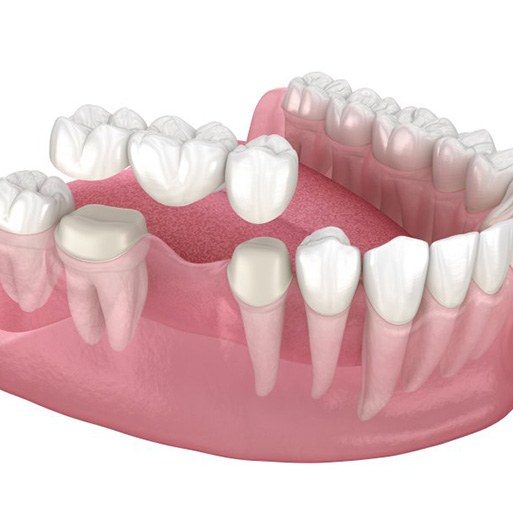
A dental bridge consists of false teeth that are suspended over a gap in your smile. Dental crowns mounted on top of teeth that are adjacent to missing ones support the bridge. Dr. Labosky takes great care to make sure each component of the bridge, which can consist of more than one false tooth, is made to look natural and feel completely comfortable in your mouth.
Types of Dental Bridges
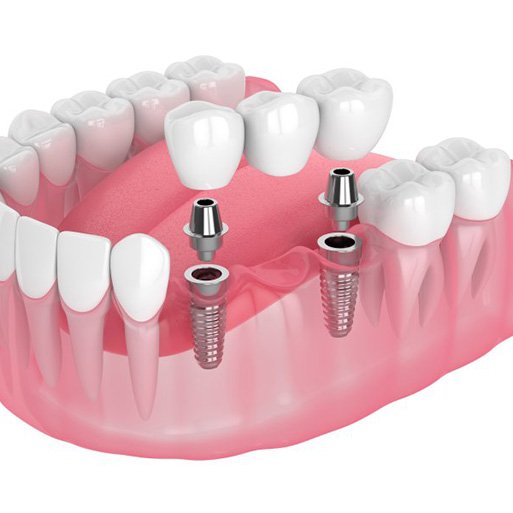
Depending on your situation and oral health, you might be eligible for two different kinds of dental bridges—each of which can fulfill different needs. Here’s what to expect from either option:
Traditional Dental Bridge
If you have healthy natural teeth, then you might be eligible for a traditional dental bridge. Your prosthetic will come with two dental crowns that will be fitted onto abutment teeth so that they can remain in place. After a couple of appointments, you’ll be able to enjoy the benefits of a full bite with results that match perfectly with the rest of your smile.
Implant Bridge
For patients who don’t have healthy adjacent teeth, then implant bridges might be the solution for you. Your prosthetics will be supported directly to your jawbone via dental implants, providing an incredibly stable foundation. For this reason, this option can also help replace more than three teeth in a row. Your results can typically last longer than traditional bridges, and the implants can help stimulate the jawbone and prevent bone loss.
The Benefits of Getting a Dental Bridge

With dental bridges, you can expect to enjoy various advantages for your smile, including:
- Improved chewing
- Better speech articulation
- Prevents dental drifting
- Boosted confidence
- Reduced risk of oral health problems
- Can last several years before needing replacements
Dental Bridge FAQs
What Are Dental Bridges Made Of?
In general, dental bridges are made from the same materials dentists use for other restorations, like crowns. At our State College practice, we offer several options, including gold, porcelain fused to metal, and all-ceramic materials.
Each provides unique benefits. For example, gold is strong and gentle on neighboring teeth, porcelain fused to metal balances strength and appearance, and ceramics offer the most natural-looking results.
The type of dental bridge you choose in State College will ultimately depend on your goals, where the bridge is located in your mouth, and your budget. But you won’t have to choose on your own. Dr. Labosky will be there to help you decide what fits your smile best.
Is Getting a Dental Bridge Painful?
If you’ve ever had a filling or a dental crown, you’ll have some idea of what to expect in terms of comfort during your procedure.
Before beginning, Dr. Labosky will thoroughly numb the area with local anesthetics, so you won’t feel any discomfort. Once the procedure begins, you should only feel pressure or vibration from the instruments, not pain.
Of course, if you feel nervous about treatment, we also offer nitrous oxide (laughing gas) and oral conscious sedation to help you fully relax in the chair. At Kevin P. Labosky, DMD, your comfort is always priority one as we work to replace missing teeth and restore your smile.
How Long Should a Dental Bridge Last?
With good care, a dental bridge can last many years. On average, bridges last around 10 to 15 years, but some last even longer with excellent oral hygiene and regular dental checkups.
The longevity of your dental bridge in State College will depend on multiple factors, like the material used, your bite, and your oral habits. Brushing twice a day, flossing each night before bed (including under the bridge) is a good start.
Combine those good habits with routine professional care, and you can protect your investment and keep your bridge functioning like new for many years.
Is a Partial Denture the Same as a Bridge?
Both partial dentures and dental bridges are designed to replace missing teeth, but they aren’t the same device.
A partial denture is a removable appliance that you take out for cleaning and sleeping. It typically clips onto nearby teeth with small clasps.
On the other hand, a dental bridge is a fixed restoration that is cemented onto neighboring teeth or dental implants to create a fixed, stable prosthetic.
Many patients prefer bridges because they feel more stable and natural, while others like the flexibility and lower cost of partials. Which you choose depends entirely on your smile goals and your budget.